
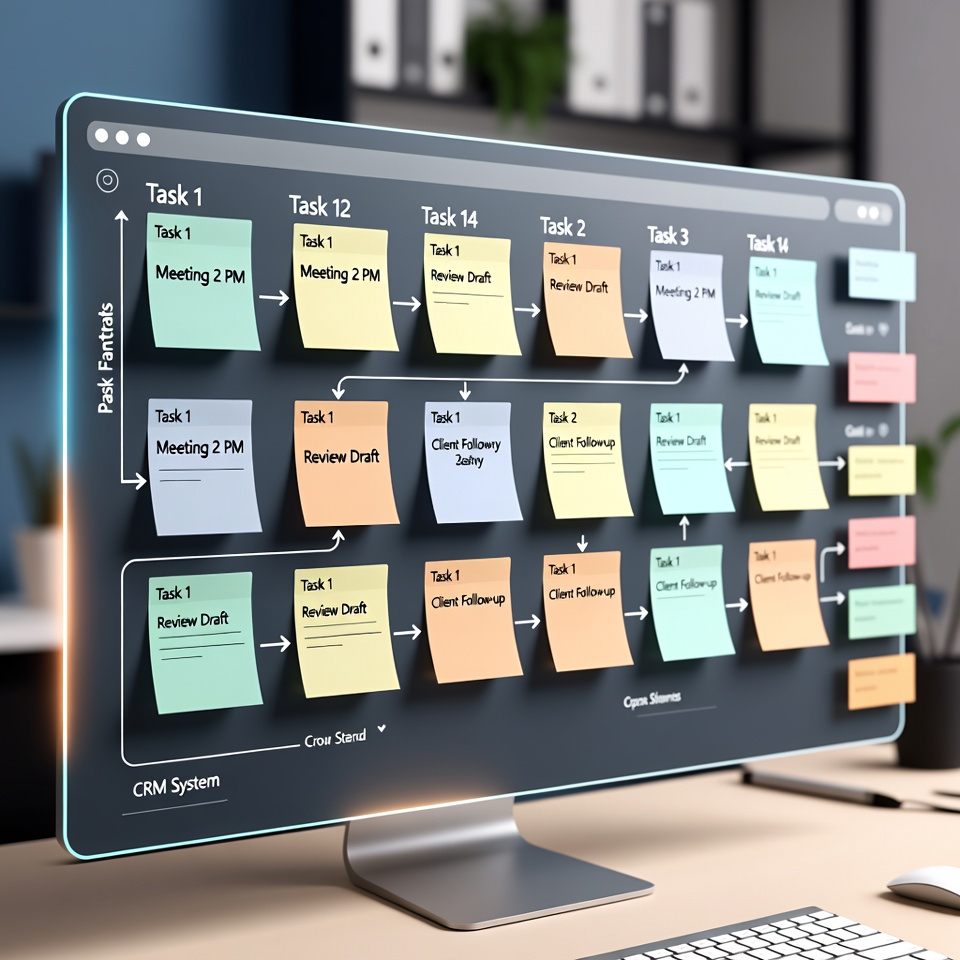
And How to Design Systems That Actually Scale
Business automation is no longer optional for small and medium-sized enterprises. With dozens of SaaS tools available, integrating systems should be straightforward.
Yet many SMEs attempt automation — and it fails.
Workflows break.
Data goes missing.
Processes become more confusing instead of simpler.
The problem is not automation itself.
The problem is how it is designed.
The Illusion of “Quick Fix” Automation
Many businesses approach automation like this:
- Connect two apps
- Trigger an email
- Sync a contact
- Move data from A to B
It works — temporarily.
But as soon as the business grows, adds tools, or modifies processes, those isolated automations start to collapse.
This is not automation architecture.
It is patchwork.
Common Reasons SME Automation Fails
1️⃣ No System Architecture
Most implementations are built one workflow at a time, without a master plan.
There is:
- No central logic layer
- No documentation
- No naming conventions
- No structured design
Result: fragile systems that no one understands fully.
2️⃣ Over-Reliance on One-Off Integrations
Many SMEs rely entirely on simple trigger-based automation tools without thinking about:
- Data validation
- Error handling
- Conditional logic
- Multi-step dependencies
- Logging
When one part fails, the entire process silently breaks.
3️⃣ No Error Monitoring
Automation without monitoring is risky.
If a workflow fails and no one is alerted:
- Leads may not enter CRM
- Invoices may not generate
- Clients may not receive confirmations
Failure becomes invisible.
4️⃣ Automation Without Process Clarity
You cannot automate chaos.
If your business processes are unclear or inconsistent, automation amplifies confusion instead of solving it.
Before building workflows, processes must be defined clearly.
5️⃣ Scaling Without Structure
What works for 10 clients often breaks at 100.
If automation is not modular and structured, growth increases system complexity until it becomes unmanageable.
What Proper Automation Architecture Looks Like
Effective automation is engineered with:
Structured Workflow Design
Clear logic paths and defined triggers.
Centralized Data Strategy
A single source of truth for critical information.
Error Handling & Alerts
Fallback systems when failures occur.
Documentation
Clear mapping of how systems connect.
Scalability Planning
Modular workflows that adapt as the business grows.
Automation is infrastructure — not a shortcut.
The Difference Between Automation and Architecture
Automation connects tools.
Architecture connects strategy, processes, and systems.
Without architecture:
- Workflows are reactive
- Integrations are temporary
- Maintenance becomes complex
With architecture:
- Data flows predictably
- Processes scale smoothly
- Teams trust the system
This distinction is what separates technical freelancers from system designers.
A Practical Example
Imagine a lead enters your website.
In a weak automation setup:
- The lead is added to CRM. That’s it.
In a properly designed architecture:
- Lead is validated
- Contact created or updated
- Tagged by source
- Assigned automatically
- Added to segmented email flow
- Task generated for sales
- Logged in reporting dashboard
- Notification sent
- Backup logged for redundancy
That is structured automation.
Why SMEs Need Engineered Systems
SMEs often assume enterprise-level system design is unnecessary.
In reality, SMEs benefit the most.
When resources are limited:
- Efficiency matters more
- Errors are more expensive
- Time is more valuable
Proper automation architecture reduces operational drag and builds predictable growth.
Stop Building Fragile Workflows
If your automation feels unstable, inconsistent, or difficult to maintain, the issue is not the tools.
It is the absence of architecture.
When automation is designed intentionally, with structure and scalability in mind, it becomes a competitive advantage — not a risk.





Leave a Reply